
Hey everyone! Thanks for stopping by. South Korea is famous globally for having some of the fastest residential internet speeds on earth, with gigabit connections being standard in most urban homes. However high internet speeds coming into your wall outlet do not automatically mean great wireless coverage throughout your apartment. Let us look at how thick concrete walls pushed smart home hub architecture to evolve.
High Density Apartment Network Traffic
Most residential apartment buildings in Korea are constructed using heavy reinforced concrete walls. While concrete provides fantastic sound insulation between units, it acts as a major barrier for 5GHz and 6GHz Wi-Fi signals. Furthermore when hundreds of neighboring apartments operate their own Wi-Fi routers in close proximity, channel congestion becomes a constant challenge that requires intelligent dynamic channel hopping.
KT and SK Broadband Router Integration
Major Internet Service Providers like KT and SK Broadband bundle tri-band mesh Wi-Fi routers directly into standard residential plans. Instead of relying on a single central router, these systems link primary and satellite nodes automatically, creating a seamless Wi-Fi mesh network that routes traffic around concrete walls without dropping connection speeds when you walk from your living room into your bedroom.
SmartThings Hub Local Protocol Support
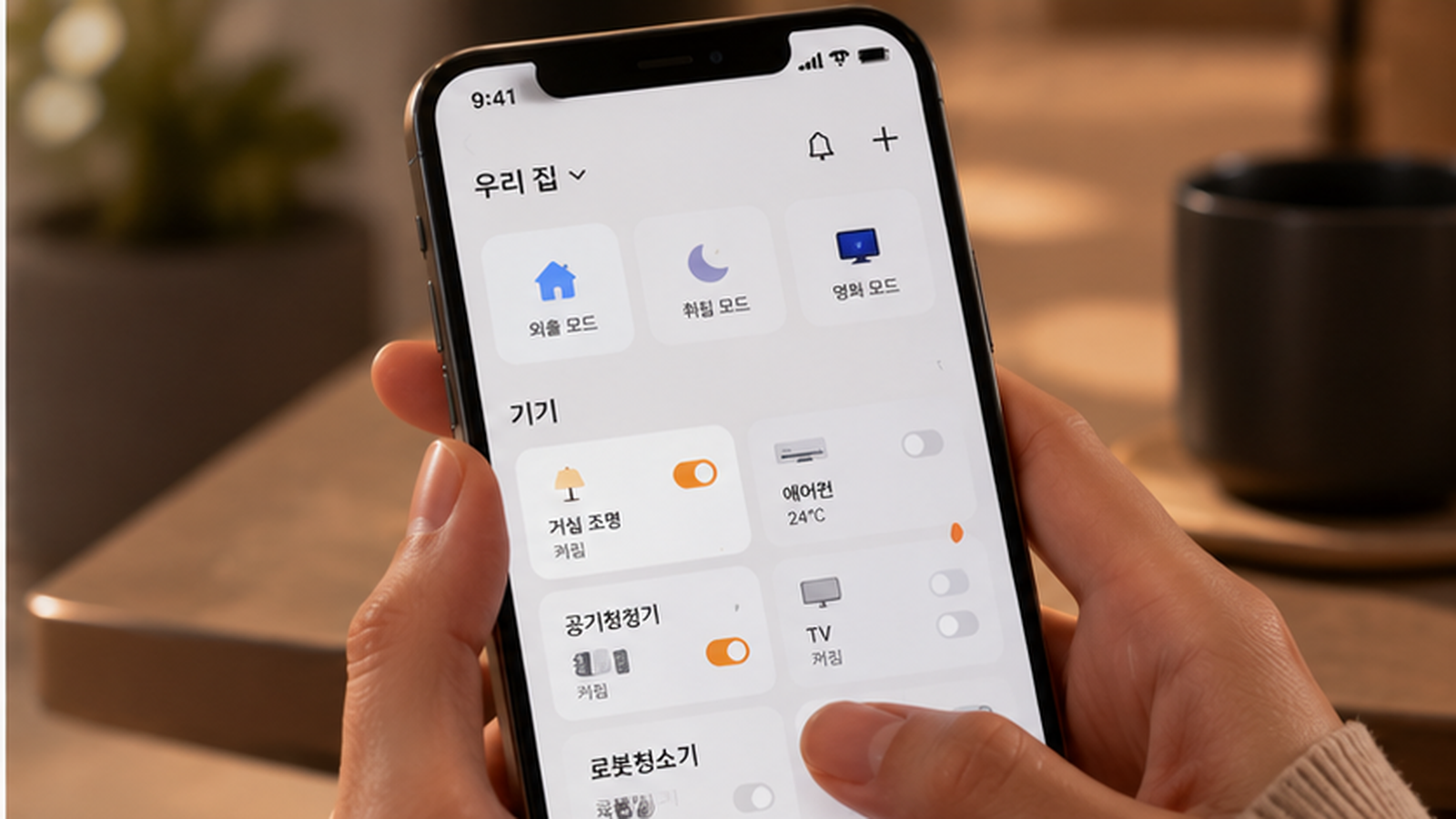
Beyond basic internet access smart home automation requires low-latency device communication. Samsung integrated dedicated SmartThings hub hardware right into TVs and soundbars. Supporting Zigbee, Thread, and Matter protocols, these local hubs allow your motion sensors and smart lights to trigger actions locally inside your local home network even if your main internet provider experiences a temporary outage.
Tech Community Experiences with Latency
If you browse smart home forums, one key metric enthusiast users discuss is local execution speed versus cloud processing. Early smart home systems sent every light button tap to remote cloud servers before turning on a bulb, causing an annoying one-second delay. Users rave about local Matter protocol adoption because executing routines locally on a home hub makes light switches respond instantaneously, feeling just as fast as a hardwired physical switch.
Future Wireless Infrastructure Horizons
Looking forward residential Wi-Fi 7 deployment will introduce multi-link operation where smart devices send and receive data across multiple frequency bands simultaneously. This eliminates packet congestion caused by smart appliances competing with high-bitrate 8K video streaming, ensuring your smart home stays rock solid.
Do you use a mesh Wi-Fi router at home or a single main router? How many smart devices do you have connected? Let me know below!