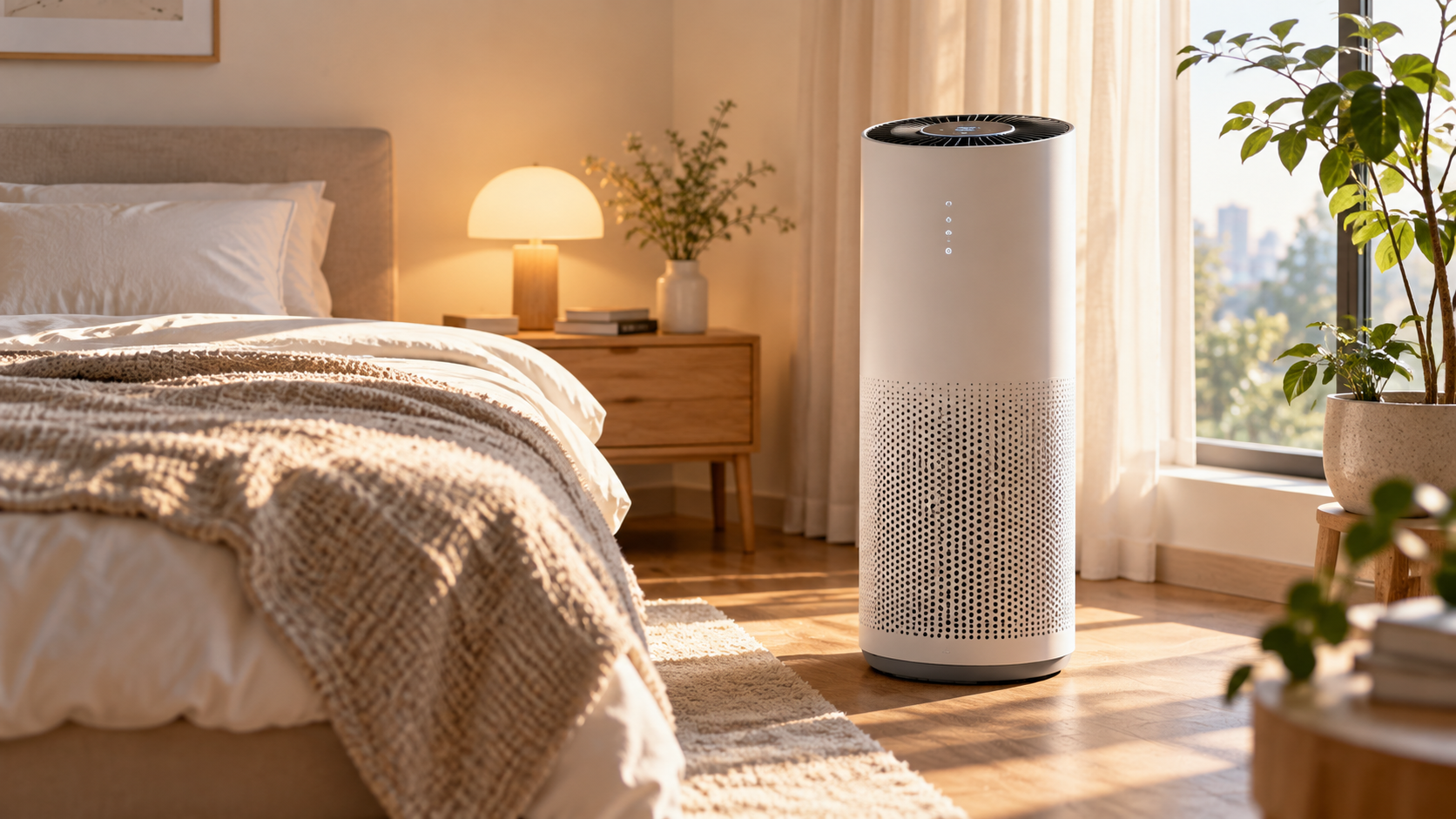
Hey everyone! Thanks for reading. Today I want to focus on an appliance that went from being a niche luxury item to a non-negotiable household basic: the smart air purifier. Breathing clean air inside our homes seems simple enough until you realize how many ultra-fine particles, cooking fumes, and allergens float around closed rooms. Let us take a look at how South Korean hardware teams designed some of the most quiet and efficient air care systems on the market today.
Indoor Air Quality Challenges
Seasonal dust events and dense urban living conditions meant that keeping home windows wide open for fresh air was not always practical in East Asia. When windows remain shut tight during summer cooling or winter heating seasons, indoor air becomes stagnant quickly. Cooking oils, pet dander, and volatile organic compounds accumulate indoors. To maintain healthy indoor air without constantly opening windows, South Korean home appliance engineers had to develop continuous high-volume air purification systems that could run 24 hours a day without blowing cold drafts on residents.
Multi Stage HEPA Filtration Systems
At the heart of any effective air purifier is its physical filter stack. Modern Korean units rely on multi-stage filtration cartridges. Air is first pulled through a washable mesh pre-filter that catches large dust hair and lint. Next, fine particles pass through a medical-grade HEPA filter layer capable of trapping micro-particles down to 0.3 microns. Finally, a specialized activated carbon layer neutralizes unpleasant cooking smells and hazardous gases, ensuring the air blown back into the room feels fresh and odor-free.
Silent Fan Motor Engineering
Running a powerful fan motor continuously inside a quiet bedroom can quickly get annoying if the noise level is too high. To address this, engineers adopted brushless DC motors paired with aerodynamically optimized fan blades. These motors precisely adjust rotation speed across subtle increments. In sleep mode, the purifier moves substantial volumes of air while producing sound levels below 20 decibels, which is quieter than a soft whisper in a library.
Real Time Air Monitoring Sensors
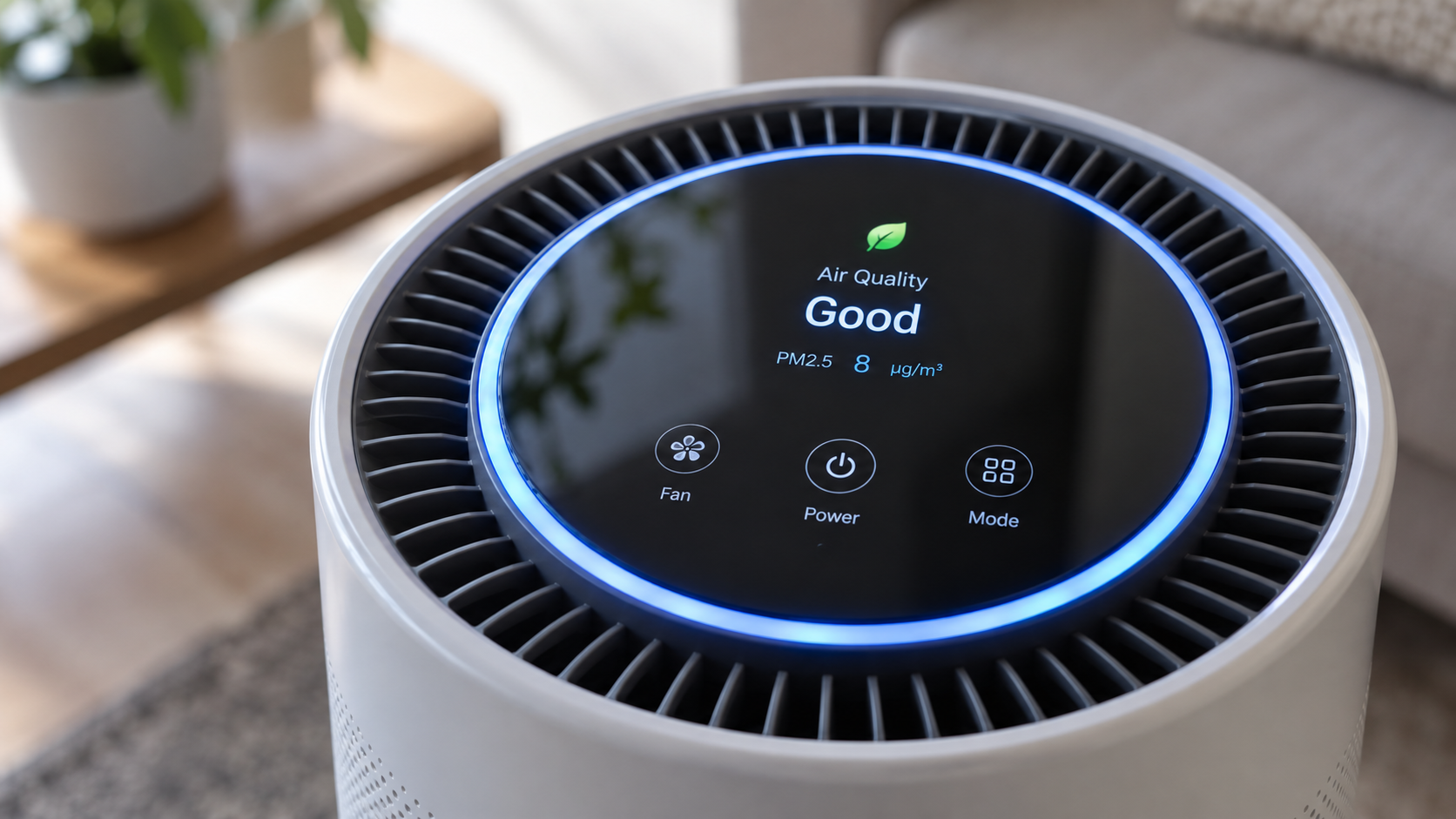
A air purifier is only as smart as its sensory awareness. Instead of relying on manual fan toggles, modern devices feature laser particle sensors and gas detection modules. These sensors constantly analyze airborne particle concentrations in real time. When you sear steak in the kitchen, the purifier immediately detects the spike in smoke and scales up its fan speed automatically, glowing a subtle warning color on its display until air metrics return to safe baseline levels.
Aesthetic Tower Design Integration
Early air purifiers resembled industrial grey boxes that stuck out awkwardly in living spaces. Korean brands pioneered 360-degree cylindrical tower designs that pull dirty air from every direction simultaneously. By wrapping the exterior in clean fabric wraps or subtle matte textures, these machines look more like ambient floor lamps or modern decor pieces, fitting naturally alongside couch setups and bedroom furniture.
Future Clean Air Living Environments
Looking forward, air purifiers are connecting directly with central climate systems and smart windows. Future setups will automatically decide whether to pull fresh air through a filtered wall ventilator or recirculate internal air based on outdoor pollution indices. As home tech continues to prioritize wellness, these quiet environmental guardians will play a key role in keeping our homes safe and comfortable.
Do you use an air purifier in your bedroom or workspace? What feature matters most to you—noise level or filtration strength? Let me know in the comments below!