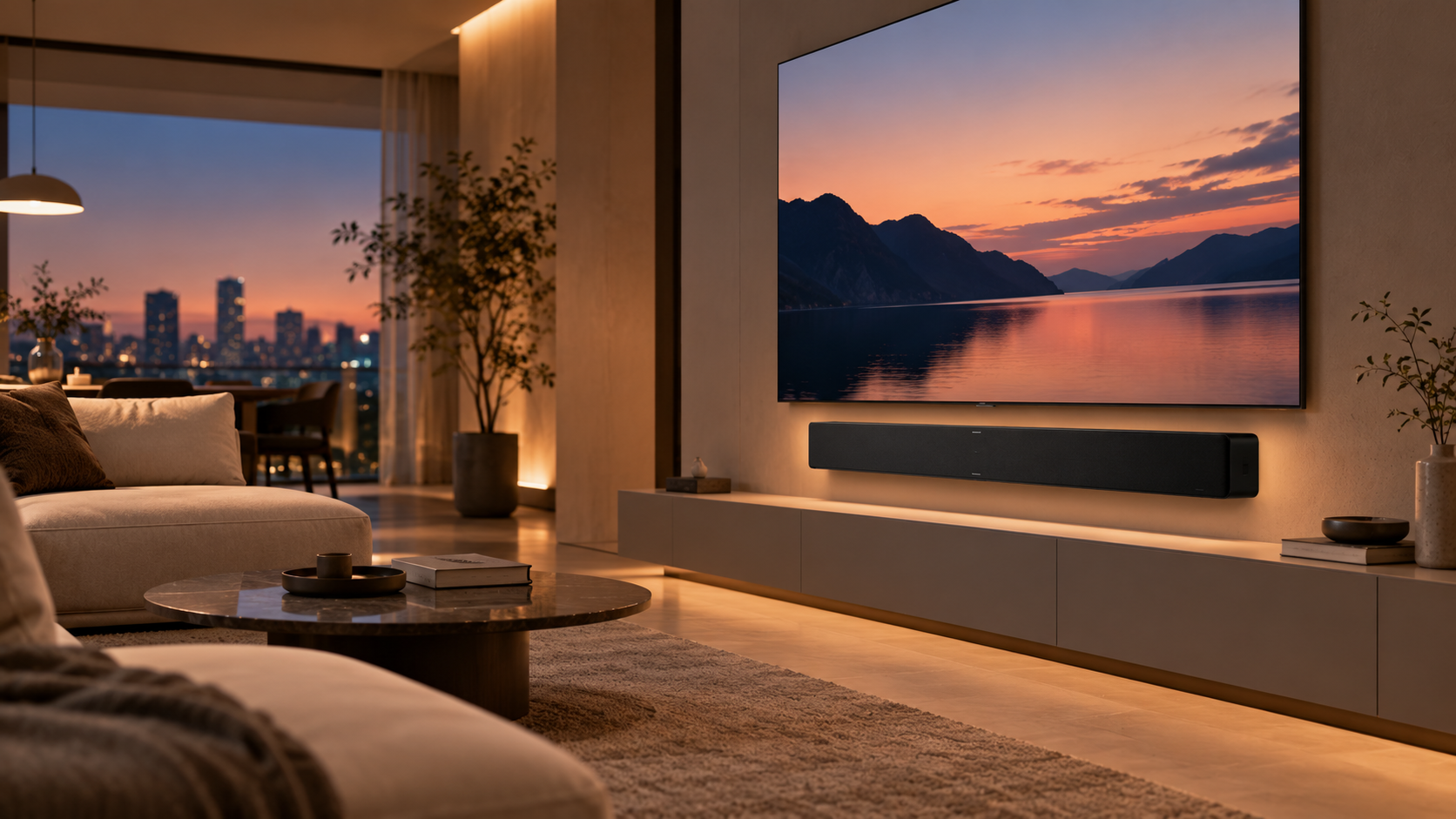
Hey everyone! Welcome back to my blog. As a computer science student who spends way too many hours watching movies in my small apartment, audio quality is something I care a lot about. For a long time most people just bought a standalone soundbar and completely muted their TV speakers. Recently South Korean companies came up with a clever way to make TV speakers and soundbars play together instead of competing with each other. Today I want to walk you through how this works and share what actual users are saying online.
Korean Audio Ecosystem Dynamics
In the past when you plugged a soundbar into your TV, the internal speakers of the television were automatically turned off. This always felt like a waste of hardware because modern flat screen TVs have multiple built-in speakers along their edges. Engineers in Korea realized that by using smart audio syncing software, they could use the TV speakers for high pitched directional sounds while letting the soundbar handle heavy bass and wide vocals. This approach creates a much taller sound field in small living rooms without requiring you to install speakers on your ceiling.
Samsung Q Symphony Spatial Sound
Samsung calls their proprietary sync technology Q-Symphony. When you pair a compatible Samsung TV with their Q-series soundbar, the system maps out every available audio channel in real time. The top and side speakers on the TV act as height channels while the soundbar projects sound directly toward your couch. I was reading a thread on a home theater forum recently where a user pointed out how much clearer dialogue sounds when action scenes get loud. Having the TV's top speakers handle vocal clarity while the subwoofer handles explosions makes a noticeable difference.
LG WOW Orchestra Acoustic Balance
LG took a very similar path with their WOW Orchestra feature. Their software focuses heavily on balanced frequency distribution so that sound does not feel like it is coming from two separate sources. Instead of just cranking up the volume on all channels, LG's processor analyzes the acoustic properties of your room and adjusts the timing of each speaker driver. A tech blogger I follow recently mentioned in a review that LG's setup feels remarkably natural during live sports broadcasts because stadium background noise stays wide while the commentators remain centered.
Real User Home Theater Reviews
When you look at real user feedback across Reddit and audio blogs, the general consensus is very positive regarding ease of setup. Most people love that they do not need to run long speaker wires across their living room rug. However several users do note a common pain point: you generally need to stay within the same brand ecosystem to unlock these features. If you mix a Samsung TV with an LG soundbar, you lose the synchronized spatial features and end up back with basic audio passthrough. That is an important detail to keep in mind before buying.
Future Trends in Spatial Audio
Looking ahead I think we will see these audio algorithms get even smarter by using room calibration microphones built directly into TV remotes. Instead of manually tweaking sound profiles, your system will measure sound reflections off your walls and adjust channel delays automatically. Korean brands are leading this space because they manufacture both the display and the sound hardware under one roof. That tight hardware integration gives them a big advantage in making immersive living room sound accessible to regular households.
What kind of sound setup do you currently use at home? Do you prefer a simple single soundbar or full surround speakers? Let me know in the comments below!