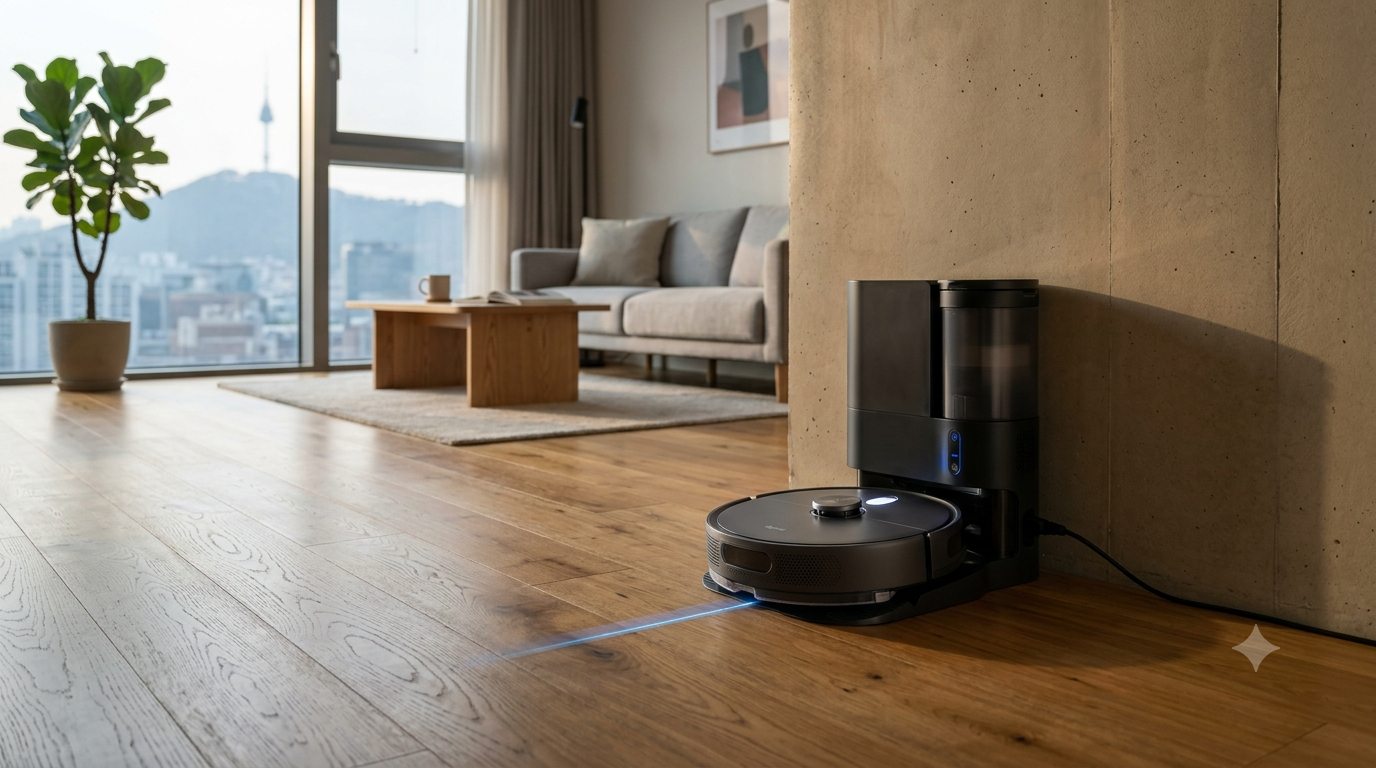
Hey everyone! Welcome back to the blog. Today I want to dive into a appliance that has saved me countless hours of manual labor during exam weeks: the robot vacuum. A decade ago these little round discs bumped blindly into dining chair legs and got stuck on electrical cords every five minutes. Today they are practically mini autonomous vehicles. Let us look at how unique living conditions in South Korea pushed engineering teams to build some of the smartest floor cleaning robots on the market.
Korean Robot Vacuum Architecture
To understand why Korean floor cleaning tech evolved so quickly, you have to look at typical homes in Seoul. Most residential apartments feature hard surfaces like polished wood or tiles rather than thick wall-to-wall carpets. Additionally, many homes have low door thresholds and custom rug setups. To keep these floors clean, a simple vacuum suction engine is not enough. Robots need active mopping pads that apply physical downward pressure while scrubbing, combined with smart water flow management that keeps pads wet without leaving puddles on wooden floors.
LiDAR AI Navigation Systems
Random navigation patterns do not work well when living spaces are packed with furniture, shoes, and stray charging cables. Korean manufacturers were early adopters of top-mounted LiDAR sensors combined with front-facing AI camera vision. The LiDAR unit spins rapidly to map out walls and doorways in three dimensions within seconds. Meanwhile, the AI camera identifies specific small objects on the floor—like pet toys or power cords—and calculates precise distance margins to steer around them smoothly without stopping mid-clean.
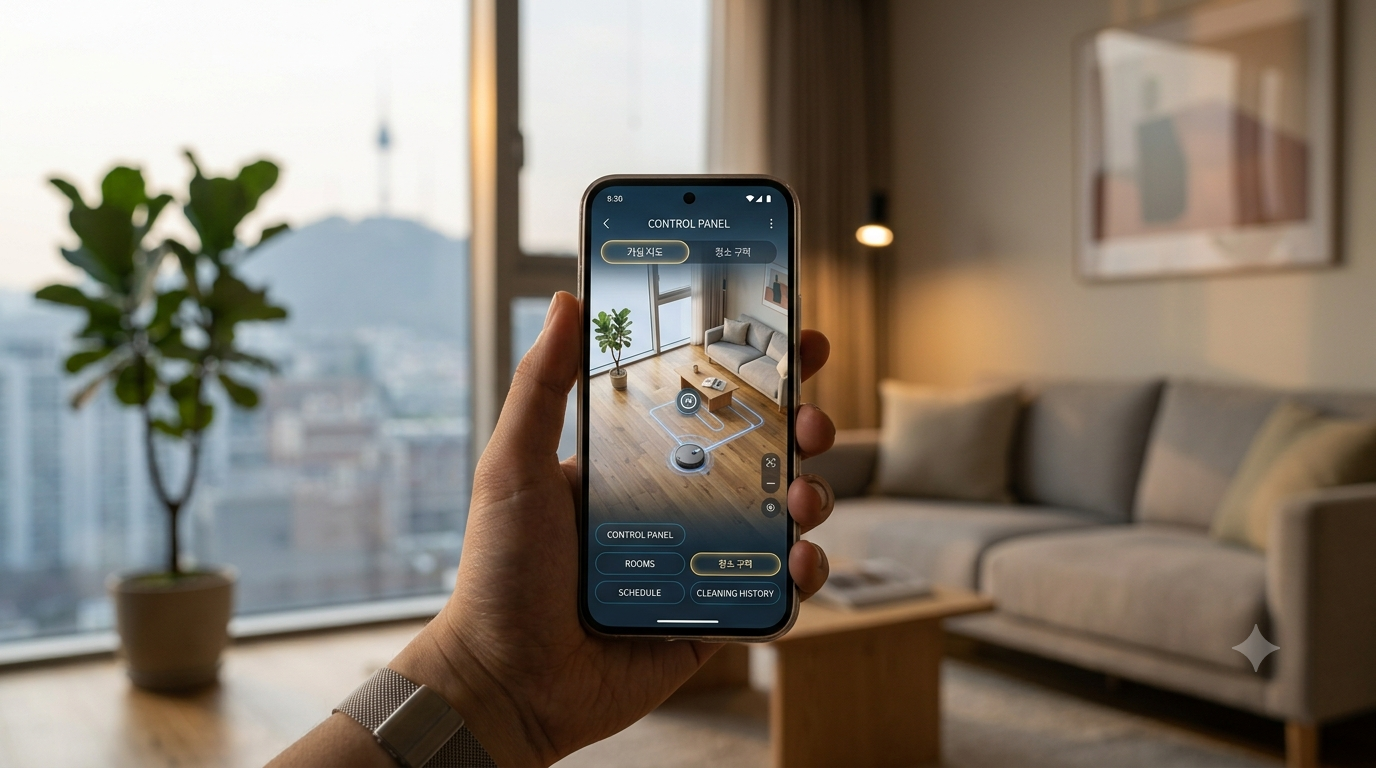
All-in-One Clean Station Hygiene
The biggest turning point for user convenience was the introduction of self-emptying docks, commonly called clean stations. Early robot vacuums required you to manually dump out tiny dust bins after every run, which was messy and released dust back into the room. Modern clean stations automatically pull debris out of the robot using powerful suction, wash the wet mop pads with heated water, and then dry those pads with warm air to prevent mold and unpleasant odors from developing over time.
Compact Apartment Layout Optimization
Living in a compact apartment means every square foot of floor real estate matters. Recent Korean hardware designs focus on shrinking the physical footprint of these docking towers so they can fit tucked beneath side tables or integrated straight into hallway cabinetry. Noise reduction engineering has also been a major priority. Multi-layered dampening inside the motor housings allows these machines to run quiet night cycles without disturbing neighbors living on the floor below.
Future Autonomous Home Cleaning
Looking ahead, robot vacuums are expanding beyond simple floor sweeping to become mobile security hubs and environmental sensors. We are seeing models that patrol homes while owners are away, checking for water leaks or monitoring family pets. As battery density improves and mechanical arms become more compact, the line between a vacuum and a general home assistant robot will continue to thin out over the next few years.
Do you use a robot vacuum at home, or do you still prefer doing things manually with a stick vacuum? I would love to hear your thoughts in the comment section below!