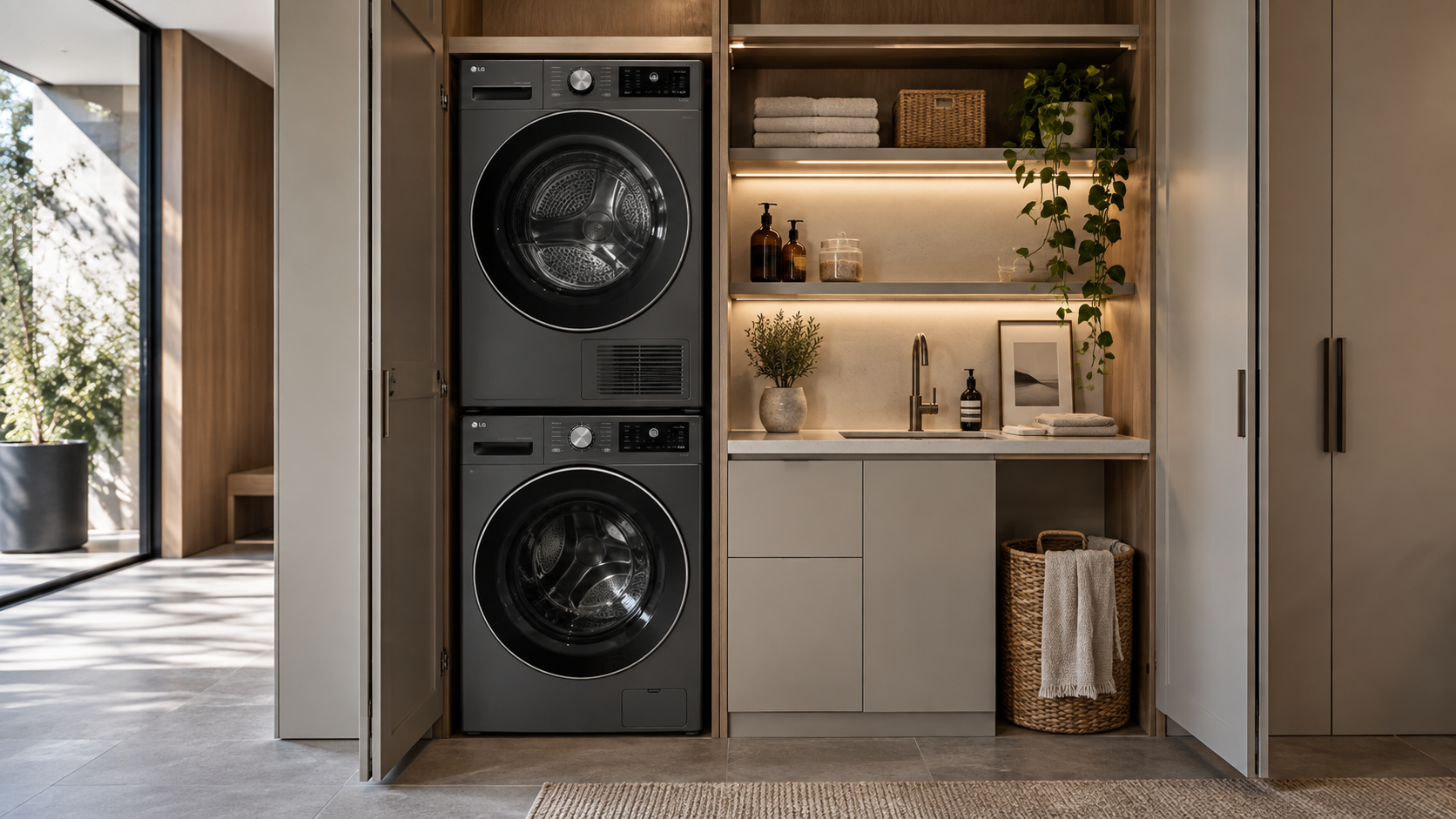
Hey everyone! Welcome back. Today we are looking at an appliance that usually sits hidden in a laundry closet: the washer and dryer setup. For decades the standard approach to heavy laundry was stacking two independent front-load machines on top of each other using a mounting kit. While that saved floor space, it created a major user experience headache. Let us talk about how Korean engineers redesigned this vertical stack into a single unified machine.
Modern Laundry System Upgrades
Stacking a separate dryer on top of a washing machine solved the floor space issue, but it brought a frustrating physical problem. The control panel for the top dryer ended up high off the ground, forcing shorter users to stretch on tiptoes or use a step stool just to read the screen. Furthermore, because the two machines operated as complete strangers, you had to manually select cycle settings on the dryer every single time after setting the wash cycle.
Integrated WashTower Architecture
To fix these ergonomic flaws, Korean manufacturers invented the unified vertical laundry center. Instead of joining two separate appliances together, they built a single chassis housing both drums. This design enabled a single, centralized control panel positioned right in the middle at eye level. From this one panel, you can control both the washer below and the dryer above without stretching or bending down, creating a drastically better physical experience.
AI Sensor Wash Cycle Precision
The true power of this unified setup lies in communication between the top and bottom drums. While your clothes are washing in the lower unit, internal sensors weigh the load and analyze fabric softness in real time. Before the wash cycle even finishes, the machine sends this data directly to the dryer above. The dryer preheats its drum to the exact optimal temperature and selects the correct drying program automatically based on the specific fabrics loaded below.
Heat Pump Drying Efficiency
Drying clothes efficiently without shrinking delicate fabrics requires precise temperature management. Older vented dryers blew scorching hot air through clothes, which consumed massive amounts of electricity and frequently damaged synthetic fibers. Modern Korean towers rely on inverter heat pump systems that recycle warm air at lower temperatures. This gentle drying process protects clothes while cutting overall energy consumption by a significant margin.
Space Saving Design for Urban Living
In compact apartments where dedicated laundry rooms are rare, appliance height and depth determine where laundry hardware can be installed. By integrating both units into a single frame, engineers reduced the overall height of the stack by several inches compared to traditional bracket setups. This subtle height reduction allows these towers to fit comfortably beneath standard overhead shelving in tight utility closets.
Fabric Care Algorithm Improvements
Looking toward the future, laundry software algorithms continue to evolve beyond basic timer controls. Newer models process micro-vibration data to detect delicate items like activewear or wool, modulating drum speed dynamically to minimize mechanical wear on clothes. As water conservation regulations become stricter globally, these intelligent algorithms ensure maximum cleaning power using minimal water volume.
Have you ever struggled with stacked laundry controls in your own home? What do you think about combining controls into a central panel? Let me know in the comments below!